Dental Implant Recovery Time in Bangkok: Complete Guide
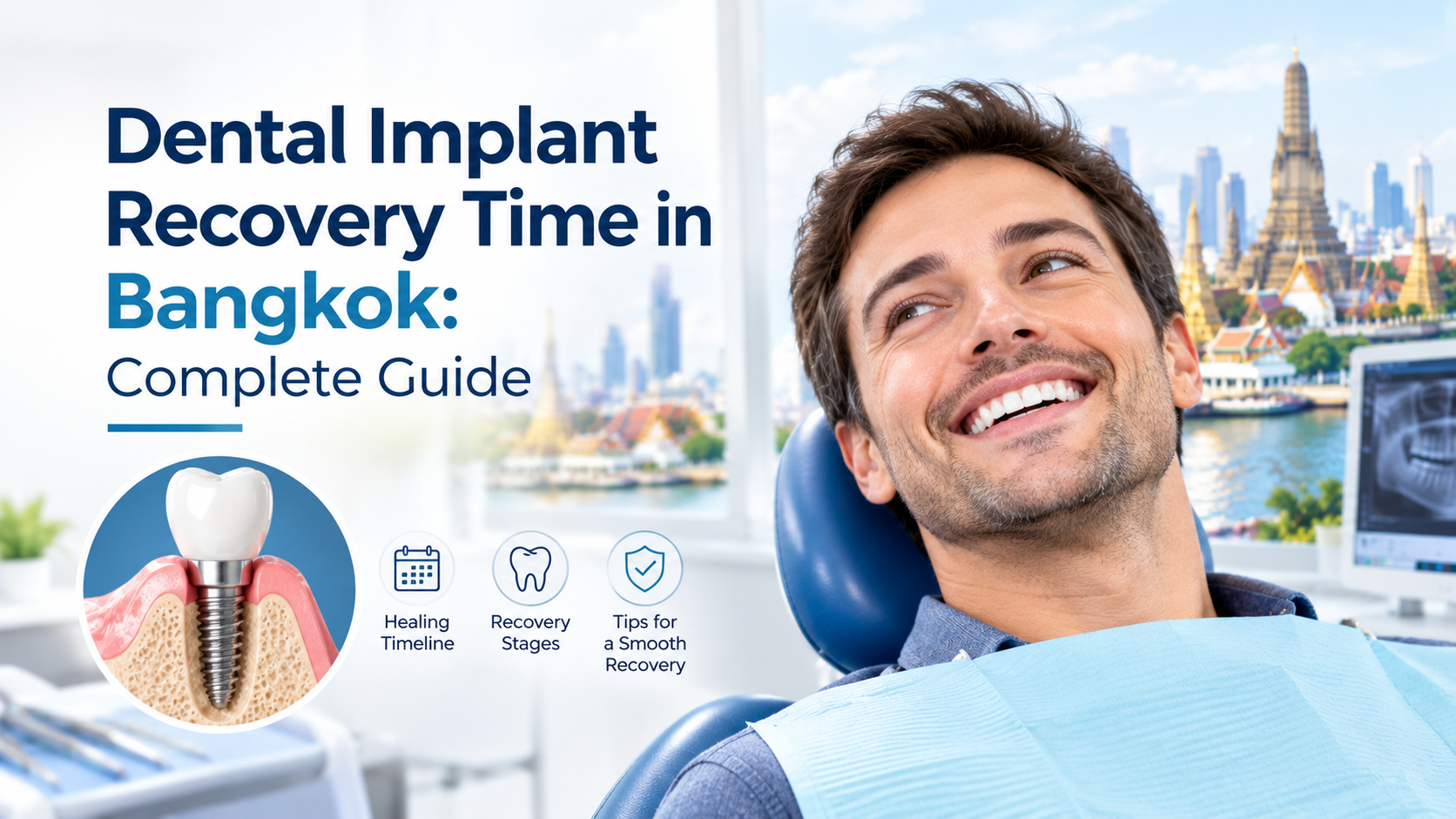
Thinking about getting dental implants in Bangkok but worried about how long recovery will take? If you’re travelling from Australia, understanding the healing process is important before you book flights, arrange time off work or plan your stay.
Dental implant recovery time depends on the procedure and your individual healing. Initial swelling and discomfort often improve within one to two weeks, while the implant can take several months to integrate with the jawbone.
In this guide, we explain dental implants Bangkok recovery time, what happens during each stage of healing, how to care for your mouth after surgery and what international patients should consider before travelling.
How Long Does Dental Implant Recovery Take?
Dental implant recovery depends on the number of implants placed, the complexity of surgery and your individual healing response.
Most post-surgical discomfort and swelling gradually improve over the first week or two. However, the implant needs more time to integrate with the jawbone before it can reliably support the final replacement tooth.
There are two main stages to understand:
- Initial recovery: The gums and surrounding tissues begin healing, and swelling and soreness gradually settle.
- Bone healing: The jawbone grows around the implant in a process called osseointegration. This commonly takes several months.
Your dentist will assess your healing and determine when the implant is ready for its final crown or other restoration.
Dental Implant Recovery Timeline: What to Expect
Recovery does not look exactly the same for everyone, but the following timeline provides a general guide.
| Recovery Stage | What You Can Expect |
|---|---|
| First 24 hours | Mild bleeding, tenderness and early swelling may occur |
| Days 2–3 | Swelling or bruising may become more noticeable |
| Days 4–7 | Discomfort and swelling often begin to settle |
| Weeks 2–4 | Gum tissue continues to heal, with follow-up as advised |
| Following months | The implant integrates with the jawbone |
| Final restoration | The permanent crown or other replacement is fitted when appropriate |
The first few days are often the most noticeable part of recovery. Swelling may peak around 48–72 hours before gradually improving. You may be able to return to normal daily activities relatively quickly, but this depends on the procedure and how you feel.
Remember that feeling better does not mean the implant has finished healing beneath the gum. Your dentist will guide you on when to resume normal eating, exercise and other activities.
What Affects Dental Implant Healing Time?
Several factors can influence how quickly you recover after implant surgery.
The complexity of the procedure: Replacing one tooth may involve a different recovery experience from placing several implants or restoring a full arch.
Bone grafting or additional treatment: If you need a bone graft, sinus lift or tooth extraction alongside implant placement, your treatment and healing timeline may be longer.
Your general health: Certain medical conditions and medications can affect healing. Share your medical history and current medications with your dentist before treatment.
Smoking: Smoking can interfere with healing and increase the risk of implant complications.
Aftercare: Following your dentist’s instructions, maintaining appropriate oral hygiene and attending review appointments all help support healing.
Your dentist can give you a more realistic estimate after examining your teeth, gums and jawbone and reviewing any necessary X-rays or scans.
How Long Should You Stay in Bangkok After Dental Implant Surgery?
If you’re travelling from Australia or elsewhere, one of the most important questions is how many days you should allow for your dental treatment in Bangkok.
There is no single stay length that suits every implant patient. The recommended schedule depends on the surgery, your recovery, any additional procedures and whether a review is needed before you travel home.
Before booking flights, ask your dental clinic:
- How many appointments are expected during your visit?
- When will the dentist review the surgical site?
- Is any additional treatment planned alongside implant placement?
- When may you travel, based on your individual procedure?
- Will you need to return to Bangkok for the permanent crown?
Allow some flexibility in your travel plans rather than scheduling your departure immediately after surgery. If recovery takes longer than expected or the dentist recommends an additional review, a flexible itinerary can make the experience less stressful.
It is also important to plan follow-up care in Australia. Ask the clinic whom to contact if you experience discomfort after returning home and how your local dentist can assist if an examination is needed.
Can You Fly After Dental Implant Surgery?
You may be able to fly after dental implant surgery, but the right timing depends on your procedure and recovery. Before booking your return flight, check with your dentist, especially if you’ve had a bone graft or sinus lift.
- Ask your dentist when it’s appropriate to fly.
- Confirm follow-up appointments before finalising travel plans.
- Keep aftercare instructions and clinic contact details handy in case symptoms develop during your journey.
Plan your travel around your individual recovery rather than assuming you’ll be ready to fly after a set number of days.
When Will You Get Your Permanent Dental Crown?
A permanent crown is usually placed after the dental implant has integrated with the jawbone, a process that commonly takes several months. The exact timing depends on your healing and treatment needs.
- Healing time: Bone quality, implant stability and additional procedures can affect the timeline.
- Temporary restoration: Some patients may be suitable for a temporary tooth while the implant heals.
- Final crown placement: Your dentist will assess whether the implant is ready to support the permanent crown.
At our Dr. Sunil International Dental Clinic in Bangkok, patients can discuss their implant treatment plan, expected healing stages and crown placement schedule with the dental team. If you’re travelling from Australia, understanding these stages in advance can help you plan your appointments and any return visit.
Planning Dental Implant Treatment at Dr. Sunil International Dental Clinic in Bangkok
Understanding dental implants Bangkok recovery time can help you make a more informed decision about treatment abroad. The next step is to establish what your own dental needs involve and how the expected healing period fits your schedule.
At Dr. Sunil International Dental Clinic, you can enquire about dental implant treatment and discuss the proposed procedure, appointment schedule and follow-up arrangements before planning your visit.
If you’re considering dental implants in Bangkok, contact the clinic to discuss your situation and find out what your individual treatment timeline may involve.
Frequently Asked Questions
How long does it take to recover from dental implant surgery?
Initial discomfort and swelling often improve over the first week or two. However, the implant usually needs several months to integrate with the jawbone before the final restoration can be fitted.
How long should I stay in Bangkok after dental implant surgery?
Your recommended stay depends on the procedure, recovery and follow-up schedule. Confirm the appointment plan and travel advice with your dentist before booking flights.
Can I fly home after getting dental implants in Bangkok?
The appropriate timing varies according to your surgery and recovery. Ask your treating dentist when it is safe for you to fly, especially if you have had a bone graft or sinus lift.
How long does a dental implant take to fuse with the jawbone?
Osseointegration commonly takes several months. Your dentist will assess healing and implant stability before deciding when the final restoration can be placed.
When can I eat normally after dental implant surgery?
You will generally need to start with softer foods and avoid putting excessive pressure on the surgical area. Your dentist will advise when you can gradually return to your usual diet based on your healing and treatment.